Hungary: Lawson gains advantage over teammate Lindblad at Hungaroring

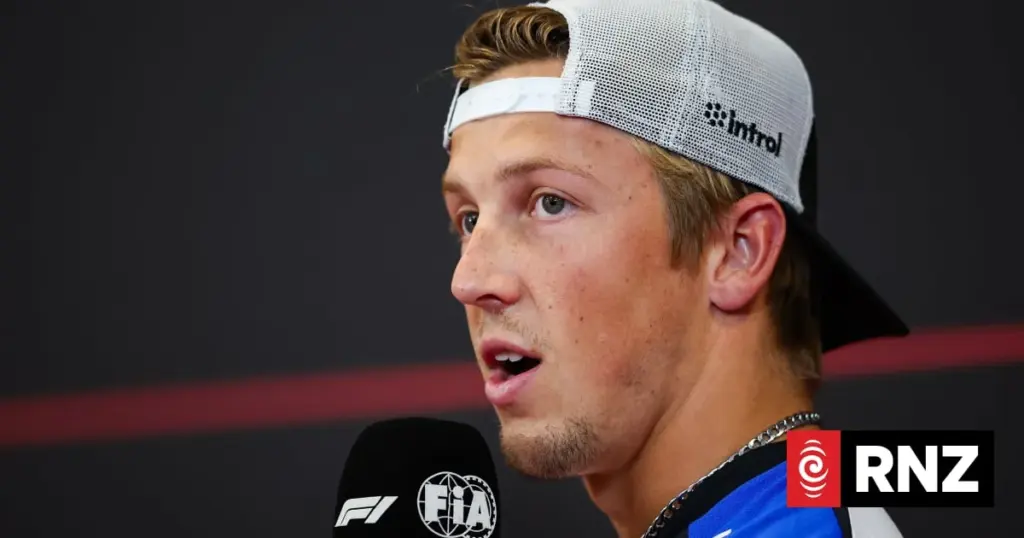
In Hungary, a responsive split-strategy approach by Racing Bulls proved crucial in maximising their points haul. The competition between teammates Liam Lawson and Arvid Lindblad has been a notable aspect of the 2026 season, with both drivers scoring points again at the Hungaroring.
Lawson demonstrated an early advantage during practice sessions at the Hungaroring. Lindblad, however, experienced a setback, losing much of FP3 due to a late power unit change. Despite this, the British driver recovered to qualify in P9, two positions ahead of Lawson, with Audi driver Nico Hulkenberg positioned between them.
Strategic Decisions Unfold
At the start of the race, Lawson took an early lead, moving past both Lindblad and George Russell to initially secure eighth place. Lindblad expressed some disappointment with his first lap, noting that his pace was quite similar to Lawson’s afterward, though he felt Lawson might have been slightly quicker.
Lawson initially held his position but lost time during a battle between Max Verstappen and Lewis Hamilton after the frontrunners completed their first pit stops. Lawson described trying to avoid interference during this period, which he said ultimately cost him time.
The initial plan for both Racing Bulls drivers involved a one-stop strategy, featuring a long first stint on medium tyres, necessitating careful tyre management. However, Hulkenberg’s performance influenced their decisions. After the Audi driver pitted, Racing Bulls reacted by bringing Lindblad in first on Lap 20, followed by Lawson a lap later, with Lawson maintaining his position ahead.
Hulkenberg’s continued presence on track led Racing Bulls to implement a split strategy. Lawson made a second pit stop on Lap 42, while Lindblad remained on track, adhering to the original one-stop plan. This one-stop approach was also adopted by the other Audi driver, Gabriel Bortoleto.
Lindblad had anticipated a two-stop race, a feeling he attributed to recent hot race conditions that made him cautious about over-extending the medium tyres. He noted that even before the race, he had suggested a two-stop strategy, despite the default plan being a one-stop.
Lawson Capitalises on Two-Stop Strategy
Lindblad reflected on his medium tyre performance, stating that he was driving slowly at the beginning of his stint, and the tyres were not performing optimally, leading to his early pit stop on Lap 21 for what would have been a 50-lap stint.
On soft tyres, Lawson demonstrated stronger pace compared to Lindblad, who was on older hard tyres. Lawson successfully caught and passed Lindblad on Lap 62, securing P8. Hulkenberg also overtook Lindblad, moving him down to P10 after Lindblad had completed a 49-lap stint on hard tyres.
Lindblad acknowledged that his one-stop strategy did not yield the desired outcome on this occasion. He understood the team’s decision to split strategies, noting that if the hard tyres had performed better, he could have finished in P8. He concluded that Lawson was the one who maximised the result for the team.
Lawson expressed satisfaction with how the race unfolded, particularly the change in strategy. He mentioned that a two-stop plan was not initially anticipated, and he had been managing the first part of his hard tyre stint when he sensed a strategic shift was underway, leading to a call to pit. He concluded that it was a strong call from the team, and the car performed well.
Lawson, a 24-year-old driver, sits tenth in the drivers’ standings with 39 points, just three points behind Pierre Gasly of Alpine. His previous run of five points-scoring races ended in Belgium, where he finished 12th. His teammate Lindblad had received the sole available upgrade for the race at Spa and finished ninth. Lawson will receive the same chassis upgrade for the Hungary Grand Prix.
The Hungary Grand Prix is the final race before Formula 1 enters a month-long summer break.
Read Also
Source: formula1.com

