Fifa ‘assessing reports’ after Argentina players display Falklands banner

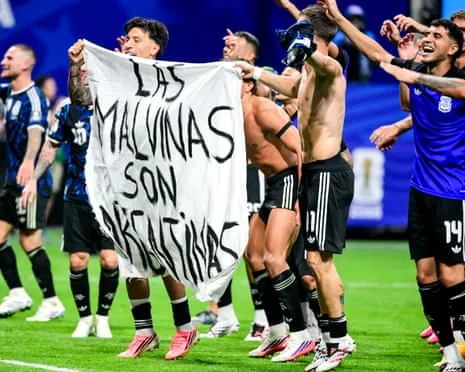
Fifa is currently reviewing match reports following an incident where Argentina players displayed a banner after their World Cup semi-final victory against England. The banner, which read “Las Malvinas son Argentinas” (The Falklands are Argentine), was shown after Argentina defeated Thomas Tuchel‘s side 2-1 in Atlanta, securing their place in Sunday’s final against Spain.
The Falkland Islands, a British overseas territory in the south-west Atlantic Ocean, remain a point of contention between the UK and Argentina regarding sovereignty. A Fifa spokesperson confirmed that the independent disciplinary committee is “assessing the match reports and considering the relevant circumstances before deciding on potential further steps based on the Fifa disciplinary code.”
This is not the first instance of Argentina‘s football association facing penalties for similar actions. In 2014, Fifa fined the association £20,000 for displaying a banner with the same message before a friendly match against Slovenia. At that time, the gesture was deemed a breach of rules concerning political action and team misconduct.
Reactions and diplomatic context
The incident has drawn reactions from various political figures. Downing Street has supported calls for Fifa to investigate, with the prime minister’s official spokesperson stating, “The World Cup might not be ours, but the Falkland Islands definitely are. Our commitment to the Falklands will never waver.” Argentina‘s President Javier Milei reportedly described the players’ action as “understandable” and “valid,” though he clarified that “the things that happen on the pitch are not part of diplomacy.” He further commented that Argentina intends to recover the Malvinas through diplomatic means.
The government of the Falkland Islands expressed disappointment over the banner and hopes Fifa will “sanction all behaviour of this nature in line with its own rules,” emphasising a desire to keep politics out of sport. Peter Kyle, the business and trade secretary, also stressed the importance of keeping politics out of the World Cup and called for a thorough investigation by Fifa. Kemi Badenoch, leader of the Conservative Party, echoed these sentiments, stating that Fifa “absolutely should investigate.”
The dispute over the Falkland Islands dates back to 1982 when Argentina, then under a military junta, invaded the islands. The conflict lasted 74 days, resulting in the deaths of 649 Argentine and 255 British servicemen, along with three islanders. In a 2013 referendum, the people of the Falkland Islands voted overwhelmingly to remain a UK overseas territory, with 1,513 votes in favour and only three against, out of 1,517 votes cast.
Potential disciplinary actions
Fifa typically takes disciplinary action for breaches of regulations by players or supporters in the weeks following a tournament. However, the context of this incident, occurring during a World Cup match between the two involved nations, could lead to more serious consideration. There is no indication that Argentina will lose its place in the final.
Liberal Democrat leader Ed Davey has called for the Argentina players involved in holding the banner to be suspended for the final against Spain. Davey cited the precedent of Uefa banning Spain players Alvaro Morata and Rodri for one game after they chanted “Gibraltar is Spanish” during Euro 2024 celebrations. Gibraltar, an enclave at Spain‘s southern tip, has been under British rule since the 18th century, and Spain has long sought its return.
Another precedent for Fifa banning a player for a political message occurred after the 2012 Olympic Games bronze medal match. South Korea midfielder Park Jong-woo displayed a sign reading “Dokdo is our territory.” Dokdo, also known as Liancourt Rocks, is a group of inlets administered by South Korea, which Japan also claims. Park was subsequently charged by Fifa and received a two-match suspension, causing him to miss two World Cup qualifiers.
The display of the banner has also been linked to broader political tensions. Argentina‘s Vice-President Victoria Villarruel shared footage evoking a landing on the islands after the match, and lawmakers in Tierra del Fuego called a recent naval passage a provocation. President Milei‘s government, however, has adopted a more cautious approach, with Milei scheduled to visit London later this month.
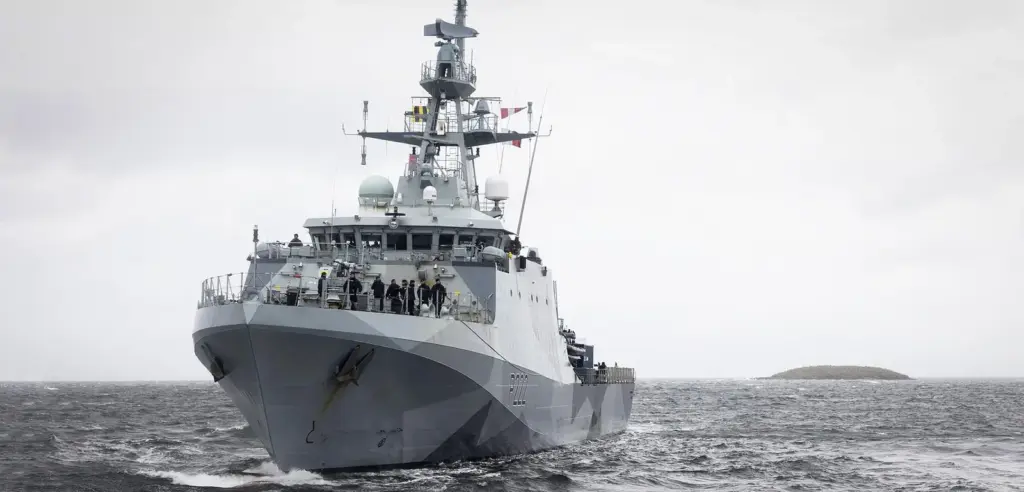
The strategic landscape in the South Atlantic has seen shifts, with Milei‘s alignment with the US deepening. An “integrated naval base” is under construction at Ushuaia, though Buenos Aires maintains it is an Argentine facility without special concessions. A 2025 emergency decree authorising US forces to participate in Argentine naval exercises, including at Ushuaia, along with high-profile US military visits, has contributed to the perception of a growing US-Argentine strategic presence near the Falklands.
The Falklands War was a significant conflict that led to the loss of many lives, and the use of the slogan “las Malvinas son argentinas” is deeply ingrained in Argentine culture. The islands were British before Argentina was founded as a state, and the claim based on proximity lacks grounding in international law. The Fifa disciplinary committee will continue to assess the reports before making a decision on potential further steps.
Read Also
Source: bbc.com

